

Introduction: The Accommodation Decision That Impacts Your Entire Project
When managing a project with contractors, accommodation is often treated as a simple checkbox — find a place, book it, move on.
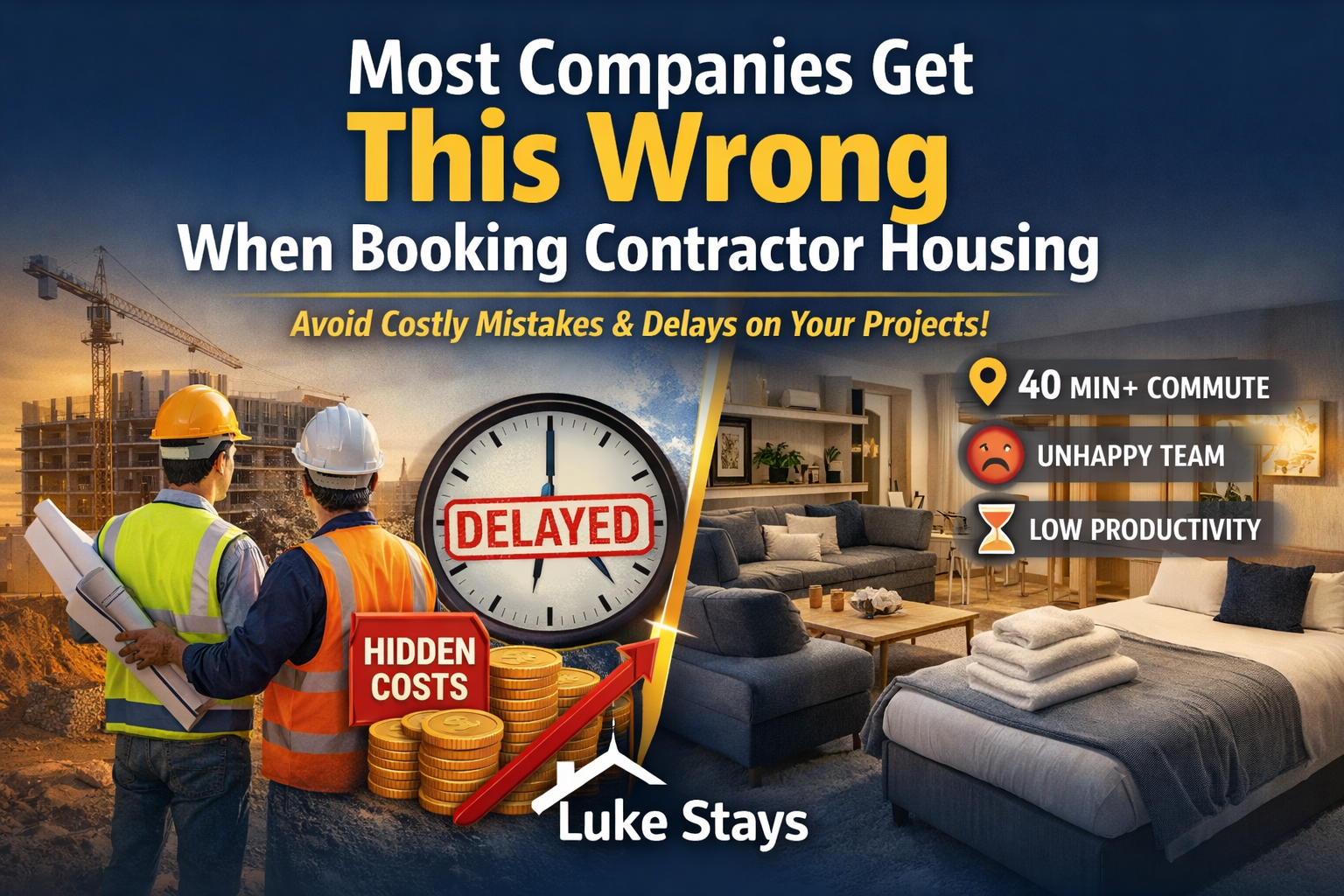
But here’s the truth: choosing between short-term and long-term contractor accommodation can significantly impact your budget, team morale, productivity, and even project timelines.
Get it right, and everything runs smoothly.
Get it wrong, and you could face constant re-bookings, unhappy teams, and unexpected costs.
So how do you decide what’s best?
Let’s break it down in a way that actually helps you make the right call.
What Is Short-Term Contractor Accommodation?
Short-term accommodation typically covers stays from a few nights up to a few weeks.
Best suited for:
- Emergency or last-minute bookings
- Short projects or site visits
- Trial periods before committing long-term
- Temporary workforce expansion
Typical options include:
- Serviced apartments
- Short-let homes
- Hotels (though often less ideal for contractors)
Advantages of Short-Term Stays
1. Maximum Flexibility
Plans change — especially in construction, engineering, or infrastructure projects.
Short-term accommodation allows you to:
- Extend stays easily
- Relocate teams if needed
- Avoid long-term commitments
2. Fast Booking Turnaround
Need housing tonight or within 24 hours?
Short-term solutions are designed for speed, making them perfect for urgent situations.
3. Ideal for Uncertain Project Timelines
If your project duration isn’t fixed, committing long-term can be risky. Short-term lets you stay agile.
Disadvantages of Short-Term Stays
1. Higher Cost Per Night
Short stays usually come at a premium. Over time, this adds up significantly.
2. Availability Risks
Booking week by week can lead to:
- Gaps in accommodation
- Last-minute relocations
- Increased admin workload
3. Less Stability for Teams
Frequent moves can impact:
- Worker satisfaction
- Routine
- Productivity
What Is Long-Term Contractor Accommodation?
Long-term accommodation typically refers to stays of several weeks to months (or longer).
Best suited for:
- Large-scale or ongoing projects
- Stable teams
- Predictable timelines
- Cost-conscious planning
Advantages of Long-Term Stays
1. Lower Overall Costs
Booking for longer durations often means:
- Discounted rates
- Better value per night
- Reduced booking fees
This can save companies thousands over the course of a project.
2. Consistency for Your Team
When contractors stay in one place:
- They settle into routines
- Feel more comfortable
- Perform better
Happy teams = productive teams.
3. Less Admin, Less Stress
No need to constantly:
- Rebook accommodation
- Manage availability
- Handle last-minute issues
Everything is handled upfront.
4. Better Property Options
Longer stays often unlock:
- Fully equipped homes
- More spacious living arrangements
- Better locations near job sites
Disadvantages of Long-Term Stays
1. Less Flexibility
If your project ends early or changes:
- You may still be tied into a booking
- Adjustments can be harder
2. Upfront Commitment
You’ll need confidence in:
- Project timelines
- Team size
- Location stability
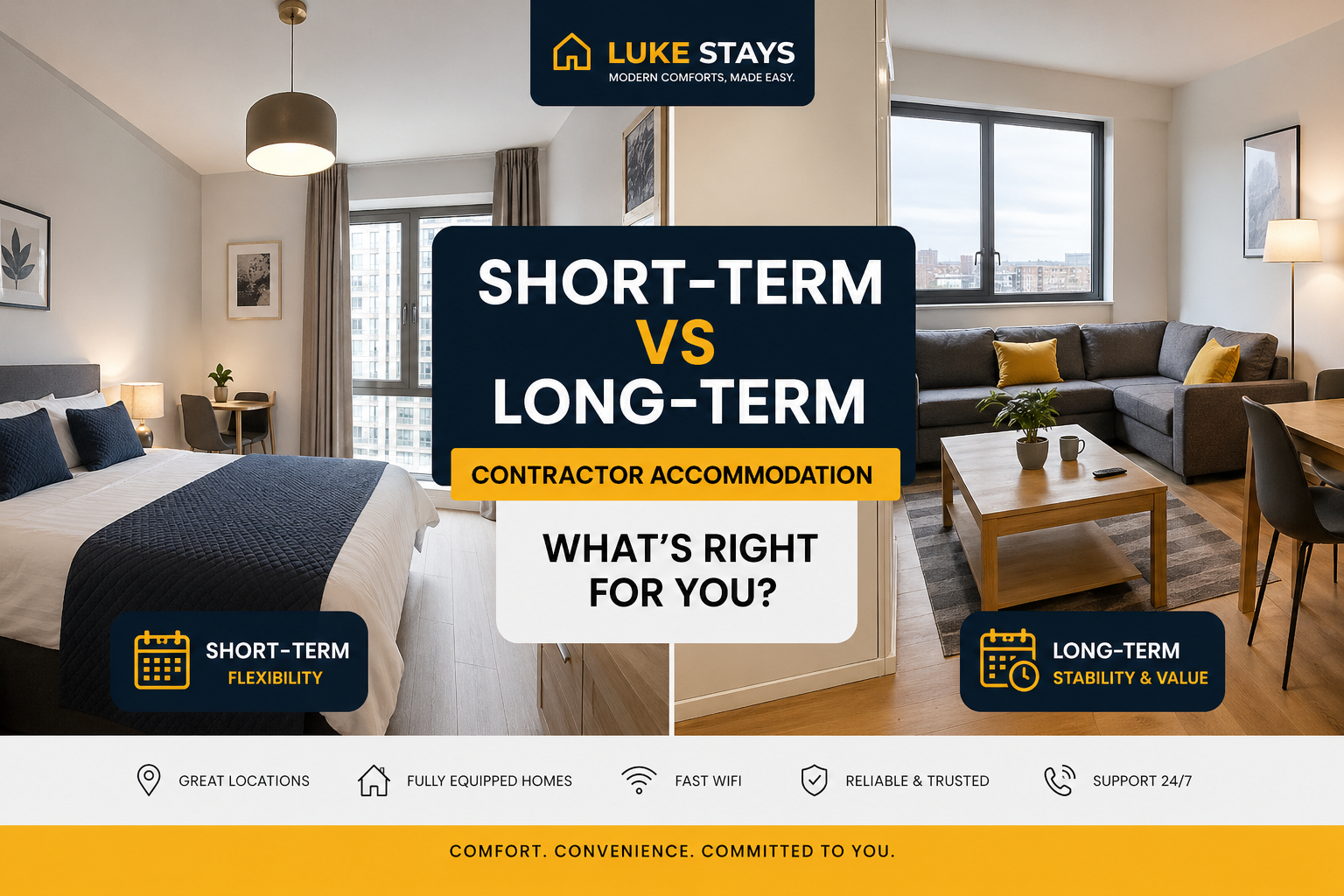
Short-Term vs Long-Term: Key Differences at a Glance
| Factor | Short-Term | Long-Term |
|---|---|---|
| Flexibility | High | Moderate |
| Cost Efficiency | Lower | Higher |
| Stability | Low | High |
| Admin Work | High | Low |
| Best For | Uncertain projects | Predictable projects |
So… Which One Is Right for You?
The answer depends on your project’s specific needs.
Choose Short-Term If:
- Your timeline is unclear
- You need accommodation immediately
- Your team size may change
- You’re testing a new location
Choose Long-Term If:
- Your project is confirmed and stable
- Your team will stay in one place
- You want to reduce costs
- You want to keep your workforce comfortable and consistent
The Smart Strategy: Combine Both
Here’s what most experienced project managers do:
👉 Start with short-term accommodation
👉 Then transition into a long-term solution once plans are confirmed
This approach gives you:
- Flexibility at the start
- Cost savings later
- Minimal risk
Common Mistakes Companies Make (And How to Avoid Them)
1. Booking Short-Term for Too Long
Many companies stick with weekly bookings for months — and overspend massively.
Fix: Transition to long-term as soon as your project stabilises.
2. Committing Long-Term Too Early
Locking into a long-term stay without certainty can backfire.
Fix: Use short-term as a buffer phase.
3. Ignoring Team Comfort
Cheap or poorly located accommodation can lead to:
- Complaints
- Lower productivity
- Higher turnover
Fix: Prioritise quality, not just price.
4. Managing Everything Manually
Handling multiple bookings yourself wastes time and increases risk.
Fix: Work with a provider that manages everything for you.
Why Luke Stays Is the Smart Choice for Both
At Luke Stays, we understand that no two projects are the same.
That’s why we offer:
- Flexible short-term solutions for urgent needs
- Cost-effective long-term stays for ongoing projects
- Fully furnished, contractor-friendly properties
- Prime locations close to job sites
- Seamless booking and management support
Whether you need accommodation tonight or for the next six months, we’ve got you covered.
Real Impact: What the Right Choice Can Do
Choosing the right accommodation strategy doesn’t just save money.
It helps you:
- Keep projects on schedule
- Improve team satisfaction
- Reduce operational headaches
- Focus on what actually matters — getting the job done
Final Thoughts: It’s Not Just About Where They Stay
Accommodation isn’t just a logistical decision — it’s a strategic one.
Short-term gives you flexibility.
Long-term gives you efficiency.
The real win? Knowing when to use each.
Ready to Book Smarter?
If you’re planning contractor accommodation and want:
- Better rates
- Less stress
- Happier teams
Luke Stays is here to help.
👉 Get in touch today and let us find the perfect solution for your project.